Company Blog
Neill Gernon - 13/06/2025
Creator-Led Growth:
A new growth motion for Devtools
A connected growth system built around how developers discover, understand and adopt products.
Developers rarely adopt tools because a brand ran the most polished campaign. They adopt them because someone credible showed them how a product works, explained why it matters or used it to solve a real problem.
That person may be an independent creator, technical educator, engineer, founder, DevRel practitioner, customer or community expert. What matters is not only their label or audience size. It is their technical credibility, their ability to create something useful and their ability to help that information travel.
We call these people Creators That Code.
Creator-Led Growth is a go-to-market approach built around them. It connects the people developers trust with the content they learn from and the channels through which products are discovered. Our original definition was simple: Creator-Led Growth unifies content and distribution.
That remains the foundation. But the way technical information travels has evolved. Creator and expert content can now be watched, shared, discussed, searched, cited, repurposed, amplified through paid media and surfaced inside AI-assisted discovery. Creators increasingly connect content, distribution and discovery.
Credible, useful technical information now has more paths through which it can shape what developers encounter, understand and consider.

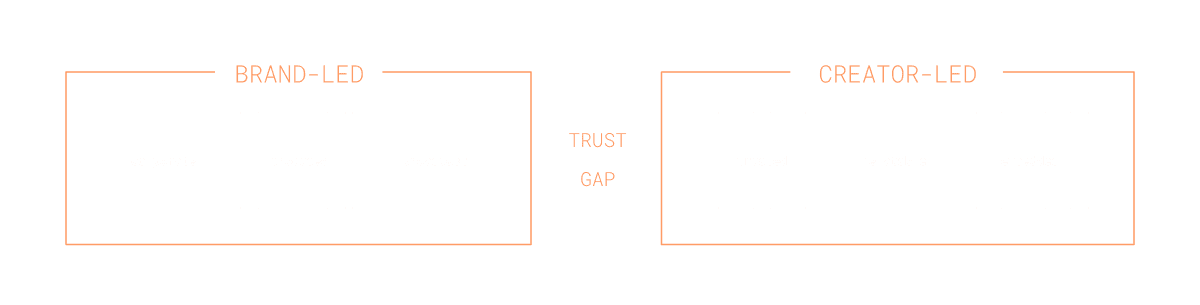
The trust gap in Devtool growth
Most developer companies already understand that content, education and community matter. They invest in blog posts, tutorials, DevRel teams, Discord communities, events, paid campaigns, search and creator partnerships. The work is often good. The problem is that it is fragmented.
A content team commissions an article. DevRel runs a workshop. Growth buys ads. A creator publishes a tutorial. An SEO team targets a query. Each activity may work, but it is rarely planned or measured as part of the same developer journey.
Developers do not experience those departmental boundaries. Their path might move from a creator video to a Reddit thread, an AI answer, documentation, a retargeting ad and finally the product. Trust and intent accumulate across that journey.
That creates a widening space between how companies market developer products and how developers actually learn and choose. It is the gap between a product demo and a peer explanation; between branded claims and a practical tutorial from someone whose judgement you respect.
Creator-Led Growth helps close that trust gap. It starts with the people, questions and conversations that matter to developers, then coordinates creation, distribution, amplification and measurement around them.
What Creator-Led growth really means
Creator-Led Growth is not another name for influencer marketing.
Influencer marketing usually begins with reach: find an audience, pay for exposure and measure the response. CLG uses a broader creator lens. It looks for technically credible people who can turn knowledge into useful content or community participation and help that work travel—whether they are independent creators, employees, customers or community experts.
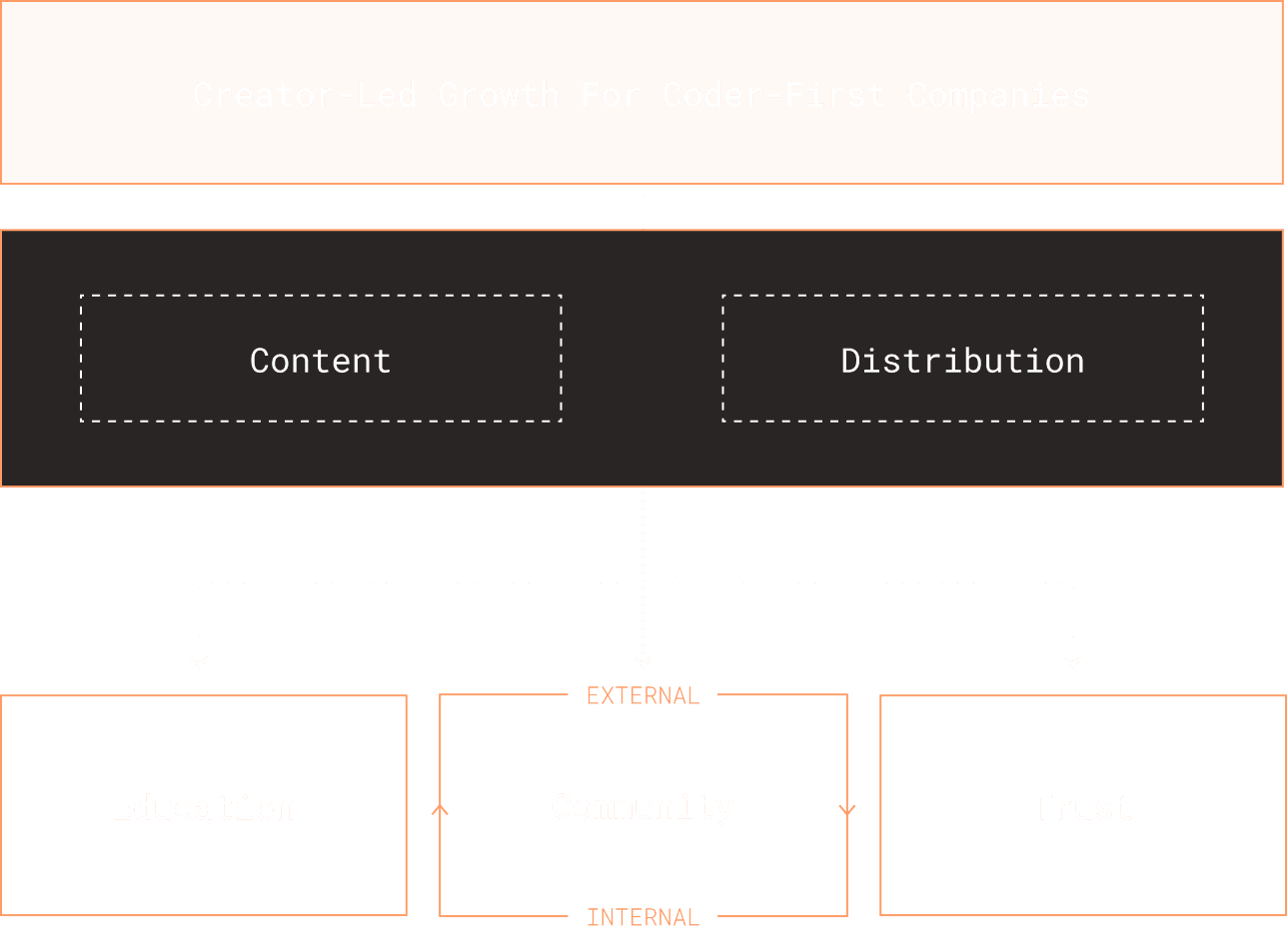
CLG starts with the developer problem:
Understand the audience. What are developers trying to learn, compare, build or solve?
Identify the opportunity. Which questions, use cases or category conversations can the company credibly contribute to?
Choose the right creator or expert. Who has the credibility and context to contribute: an independent creator, engineer, founder, customer or community expert?
Create something useful. A tutorial, comparison, demo, article, discussion, project or event—not content for its own sake.
Distribute and amplify it. Through the creator’s audience, company channels, communities, search, AI-accessible web content or paid media where appropriate.
Measure and learn. Look across attention, discovery, intent and commercial signals, then use the evidence to improve the next decision.
The creator is not simply media inventory. They can shape the idea, improve the explanation, bring product context and help the work travel. CLG connects those credible people with useful content, coordinated distribution and decision-grade measurement.
Why creators matter for developer products
Developer products need to be understood in context. Creators close the gap between a feature list and a real workflow by demonstrating, comparing, troubleshooting and teaching.
This is why technical credibility often matters more than reach alone. A respected specialist with a small audience can be more valuable than a broad technology personality if the right developers trust their judgement on the problem being solved.
The strongest creator partnerships combine three assets:
Expertise: enough technical understanding to say something useful.
Creation: the ability to turn that understanding into clear content.
Distribution: access to an audience, community or channel where the work can have influence.
Not every person needs equal strength in all three. Some independent creators bring substantial reach and editorial independence. An engineer or founder (that creates content adhoc) may bring deeper expertise that the company can distribute through its own channels. Customers and community experts bring evidence from actual use. A strong CLG system understands those differences rather than collapsing everyone into one generic creator bucket.
From distribution to discovery
Distribution is the deliberate act of putting content in front of an audience: publishing to YouTube, sharing through a newsletter, posting on social, placing an ad or activating a community.
Discovery happens when someone encounters useful information while trying to answer a question, compare an approach or solve a problem. That can happen through search, social feeds, communities, recommendations or AI interfaces.
The distinction matters because content can continue working beyond its initial publication and audience. A creator video might generate its first wave of attention on YouTube, be discussed on Reddit, support paid creative, inspire an attributed technical article and later appear as a source or supporting link in search or AI-assisted experiences.
Google says its AI search features surface supporting web links and may search across multiple subtopics and data sources. ChatGPT search similarly provides answers with links to web sources. This confirms that AI-assisted discovery is connected to a broader information ecosystem, not isolated from it.
It does not prove that a particular creator asset will be cited, nor that a citation will generate adoption or revenue. The practical implication is more grounded: companies should treat high-quality creator content as reusable intellectual property, not a one-time impression purchase.
Who’s already building parts of the motion?
Many leading developer companies already use elements of Creator-Led Growth, even when they do not call it that.
CLERK
Started with outbound YouTube, then scaled into a full inbound creator program. Today, it’s a standout example of a company moving from creator experiments to a cohesive, creator-led system.
> clerk.com/creators

Neon
Runs both an inbound creator program and outbound YouTube sponsorships, making it one of the more visibly active brands experimenting with both sides of the CLG motion.
> neon.com/creators

SNYK
Operates both an ambassador program and an outbound creator campaign engine to support launches, events, and community buzz. A clear example of blending community with influencer tactics.
> snyk.io/snyk-ambassadors

LARAVEL
Leverages its community through a global meetup program, an inbound play that turns speakers and organizers into brand advocates.
> meetup.laravel.com

CIRCLECI
Runs a traditional technical writer program. While focused on one creator type, it's a solid example of open-door content collaboration with real developer value.
> circleci.com/blog/technical-authors-program
What Creator-Led Growth Looks Like in Practice
A developer company launching a new capability might once have commissioned a sponsored video and stopped at publication.
A Creator-Led Growth approach asks a wider set of questions:
What are developers asking, and where is the company underrepresented or misunderstood?
Which creator or expert has the right credibility, and what format will genuinely help?
How should the work be distributed or amplified across creator, company, community, search and paid channels?
Which attention, discovery, intent or commercial signals should be measured?
One strong piece of expert content can become the centre of a coordinated motion. The point is not to turn every video into ten mediocre assets. It is to recognise when an idea is valuable enough to travel further.
Build the creator system inside and outside the company
Creator-Led Growth can begin with a single insight or collaboration and grow into a network of trusted voices. The opportunities come from three places: expertise already inside the company, people who choose to engage with it and relevant work already appearing in the market.
Internal: capture the expertise that would otherwise be lost
Employees already answer customer questions, explain technical decisions, share opinions and notice patterns in the market. Create a lightweight process to capture those insights and turn the strongest ones into useful content.
Give engineers, founders, DevRel and customer-facing teams simple ways to contribute ideas, notes or recordings.
Pair subject-matter experts with people who can shape, edit and distribute the work.
Recognise and reward useful contributions without expecting every employee to become a public creator.
Inbound: make it easy to participate
Create a clear public path for writers, educators, builders, customers and community leaders to understand how they can work with your company.
Explain the program, ideal contributor and value exchange.
Offer appropriate incentives: payment, affiliate revenue, product access, technical support or co-marketing.
Welcome different forms of contribution rather than optimising only for large social audiences.
Promote the opportunity through the channels and communities creators already use.
Notice emerging talent. A technical writer may become a speaker; an indie builder may produce an excellent use case; a small creator may grow into a valuable long-term partner.
External Discovery: separate strategic partners from relevant contributions
Build strategic partnerships with creators whose expertise and engaged audiences fit recurring goals—for example, a long-term YouTube partner program.
Also monitor for relevant posts, discussions, projects and tutorials about your brand, category or customer problem, regardless of the creator’s size.
When a useful contribution appears, ask whether it should be amplified, expanded into a deeper asset or developed into an ongoing relationship.
Start with the value of the contribution, then choose the right incentive, format and distribution—not the other way around.
These three routes reinforce one another. Employee insight can inspire an external collaboration. A small community contribution can become a valuable article or reveal a future strategic partner. Public creator activity attracts more contributors. Over time, the company learns which people and ideas are valuable for which kind of work.
That is the flywheel: not simply more creators and more content, but better opportunities, stronger relationships, more useful work and learning that improves the next decision.
Build relationships, not a roster
Creator-Led Growth compounds when companies stop treating creators as interchangeable campaign inputs. Long-term partners build product knowledge, understand the audience and learn which explanations land. The company learns where each creator is strongest: education, launches, technical depth, community access or performance creative.
The aim is not the largest possible database. It is a network of credible people who can help the company partipate usefully in the conversations shaping its market.
Measure the system, not only the post
Views, clicks and engagement matter, but they rarely capture the whole effect of technical creator work. A practical measurement model looks across four layers:
Attention: views, impressions, watch time and engagement.
Discovery: branded search, mentions, relevant search visibility, citations and presence in category conversations.
Intent: qualified visits, documentation activity, GitHub or product actions and sign-ups.
Commercial impact: opportunities, pipeline and revenue where the data is available.
Perfect multi-touch attribution is unlikely. Reports should distinguish observed metrics, plausible contribution and unproven causality. The goal is not to force every outcome onto a single post; it is to identify repeatable patterns and make better decisions.
The larger idea
Creator-Led Growth is not a claim that creators should replace DevRel, content, community, paid media or search. It is a way to make those efforts work together around credible people and useful information.
The companies that do this well will not merely sponsor more creators. They will understand what their market cares about, involve the right voices, create work worth discovering and compound its value across channels.
That is the shift: From buying isolated pieces of content to building a connected system of expertise, content, distribution and discovery.
Creator-Led Growth (CLG) for Devtools connects the people developers trust with the content they learn from and the channels through which products are discovered.
FAQ
Creator-Led Growth for Devtools
What is Creator-Led Growth (CLG)?
Creator-Led Growth is a growth system for developer companies that connects credible people, useful content, coordinated distribution and decision-grade measurement. Its purpose is to make those assets compound rather than operate as isolated campaigns.
How is creator-led growth different to influencer marketing?
Influencer marketing usually centres on paid access to an audience. CLG can include sponsorships, but it begins with a developer opportunity and coordinates the right expertise, content, distribution and measurement around it. Creators are collaborators, not simply media inventory.
What kind of content works best for CLG?
Content that genuinely helps developers understand, compare or use a product: tutorials, technical walkthroughs, comparisons, demos, use cases, talks, discussions, projects and community activity. The right format depends on the opportunity and audience.
Does a creator need a large audience?
No. Audience reach is one form of distribution, but niche expertise, community trust or real product experience can matter more. Some experts create valuable work that a company or partner distributes through other channels.
Does creator content automatically improve AI visibility
No. Credible technical content can travel through search, communities and AI-assisted discovery, but there is no guarantee that an asset will be cited, ranked or drive revenue. CLG should improve the quality and distribution of useful information without overstating causality.
What are examples of Creator-Led Growth in action?
Companies like Neon, Snyk, Laravel and Clerk have scaled creator-led strategies by collaborating with technical YouTubers, newsletter authors, meetups and course creators. These creators explain, demonstrate, and teach the product to their audience, leading to organic adoption and community buzz.
How do you measure success in a Creator-Led Growth?
Measure evidence across attention, discovery, intent and commercial outcomes where available. Do not treat correlation as proof or promise perfect attribution. Measurement should help improve the next decision.